Stop hunting is one of the most common and least discussed risks in crypto trading. It happens when large market participants like institutional traders, whales, or market makers deliberately push the price of an asset toward levels where retail traders have placed their stop-loss orders.
When those stops trigger, the resulting cascade of automatic sell or buy orders creates the liquidity the bigger player needed to build or exit a position. Retail traders take the loss. The whale takes the profit.
Understanding how stop hunting works and how to recognize it before it catches you is a fundamental part of managing risk in active trading.
What is stop hunting?
Stop hunting is the deliberate act of moving price to a level where a cluster of stop-loss orders sits, triggering them to create forced buying or selling in the market.
Most retail traders place stop-loss orders at predictable locations: just below key support levels, just above key resistance levels, at round numbers, or at obvious chart structures like previous highs and lows. Over time, these predictable clusters become visible in the order book and they become targets.
A large trader who can temporarily move the market does not need price to go to those levels organically. They can push it there themselves, trigger the stops, and then reverse their position into the resulting liquidity.
How stop hunting works
- Retail traders place stop-loss orders at predictable levels.
- Large traders identify these clusters by reading the order book, monitoring liquidation heatmaps, or simply knowing where retail behaviour tends to concentrate.
- The large trader pushes price toward the stop cluster using a series of large sell orders (for a downward stop hunt) or buy orders (for an upward stop hunt).
- When price reaches the stop level, the retail orders trigger automatically, creating a wave of selling or buying that accelerates the move.
- The large trader immediately reverses direction. Buying the asset cheaply (after a downward hunt) or selling at an elevated price (after an upward hunt).
- Price snaps back toward where it was before. Retail traders are stopped out with a loss. The large player profits from both the move and the reversal.
How to identify stop hunting on a chart
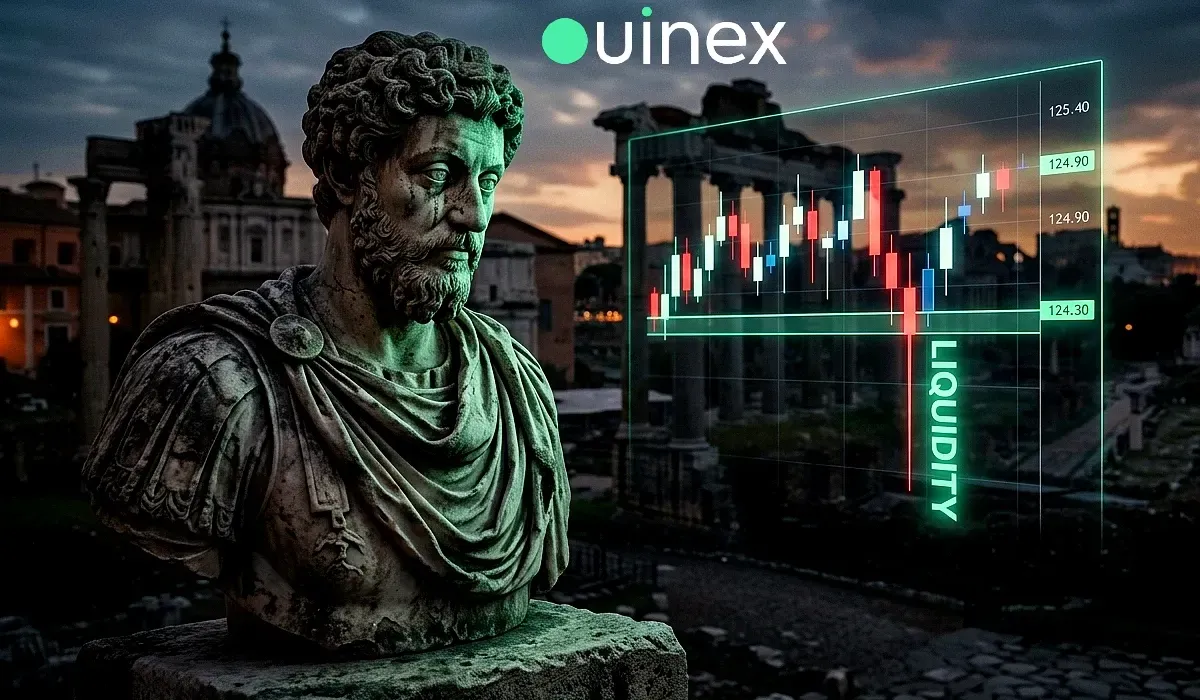
Stop hunts leave a distinctive signature on a candlestick chart. The most common pattern is a sharp wick, a sudden spike in one direction that quickly reverses within the same candle or the next one.
These spikes often appear as false bullish signals or false bearish signals, a candle that appears to break out strongly in one direction, only to close in the opposite direction.
A long upper wick on a green candle, for example, often marks an upward stop hunt where buyers were pulled in just before the price reversed sharply downward.
Other signs to watch for:
- Price spikes briefly through a clean support or resistance level and then snaps back immediately
- High volume on the wick but thin volume on the reversal candle that follows
- Liquidation heatmaps showing dense stop clusters just below current price that suddenly clear
- The move happens during low-liquidity hours (weekends, early morning) when less capital is needed to push price
Where traders place stops that get hunted
The most commonly hunted stop locations are:
- Just below round numbers
- Just below recent swing lows or above recent swing highs
- Directly at support and resistance lines that appear on every trader's chart
- At the low or high of a previous day's candle (which many traders use as a reference)
- Tightly below an entry price
The more obvious the stop location, the more traders who share the same chart reading, the more likely it is to become a target.
Size down, widen stops
How to protect yourself from stop hunting
No strategy eliminates stop hunt risk entirely, but the following approaches reduce exposure significantly:
- Avoid the obvious levels: Do not place stops exactly at round numbers or directly at support and resistance. Move your stop a few percentage points beyond the obvious level, where the stop hunt typically exhausts itself before reversing.
- Size down, widen stops: A wider stop on a smaller position gives you more room to survive a stop hunt without being caught. Your maximum loss stays the same, but you avoid being triggered by a temporary spike.
- Watch volume on breakouts: A legitimate breakout is accompanied by expanding volume. A stop hunt spike on low volume that immediately reverses is a clear signal the move was manufactured.
- Choose a platform with a visible order book: Choosing a crypto derivatives trading platform with a visible order book reduces your exposure to these tactics. When you can see the real buy and sell orders in the market, you can identify where liquidity is genuinely thin and where price is being pushed artificially.
Platforms that operate without order book transparency give large traders a significant informational advantage over retail participants. Ouinex makes sure it's fair for all traders.
- Use kill switch: Use kill switch protection on platforms that offer it, a kill switch closes all your open positions instantly when triggered. This is particularly useful if you are caught in a stop hunt and need to exit everything quickly before the reversal accelerates against you.
- Trade on transparent platforms: Platforms built to prevent stop hunting use CLOB execution models and real-time order book visibility that remove the informational edge large players rely on.
People Also Ask
What is “stop hunting” in crypto?
Stop hunting is when large market participants deliberately push the price of an asset toward levels where retail traders have placed their stop-loss orders, triggering those orders to create forced buying or selling that they can profit from.
Is stop hunting illegal?
Stop hunting exists in a grey area. In traditional regulated markets, deliberate price manipulation is illegal. In crypto markets, which are less regulated, the practice is widespread and largely unpunished. It is a risk every active trader must manage rather than rely on enforcement to prevent.
How do I know if a price move is a stop hunt or a real breakout?
Watch for three things: the speed of the reversal (stop hunts reverse almost immediately), the volume profile (a spike on thin volume that quickly reverses is suspicious), and whether the candle leaves a long wick with a close in the opposite direction. A genuine breakout tends to hold above or below the level it broke.
Where should I place my stop-loss to avoid “stop hunting”?
Avoid placing stops at obvious levels round numbers, previous highs or lows, or directly at support and resistance lines. Instead, place stops beyond the area where a stop hunt would naturally exhaust itself, combined with a smaller position size to keep your total risk the same.
Does stop hunting happen in both directions?
Yes. Downward stop hunts target long traders with stops below support. Upward stop hunts (also called short squeezes) target short traders with stops above resistance. Both follow the same mechanics: push price to the stop cluster, trigger the cascade, profit from the reversal.