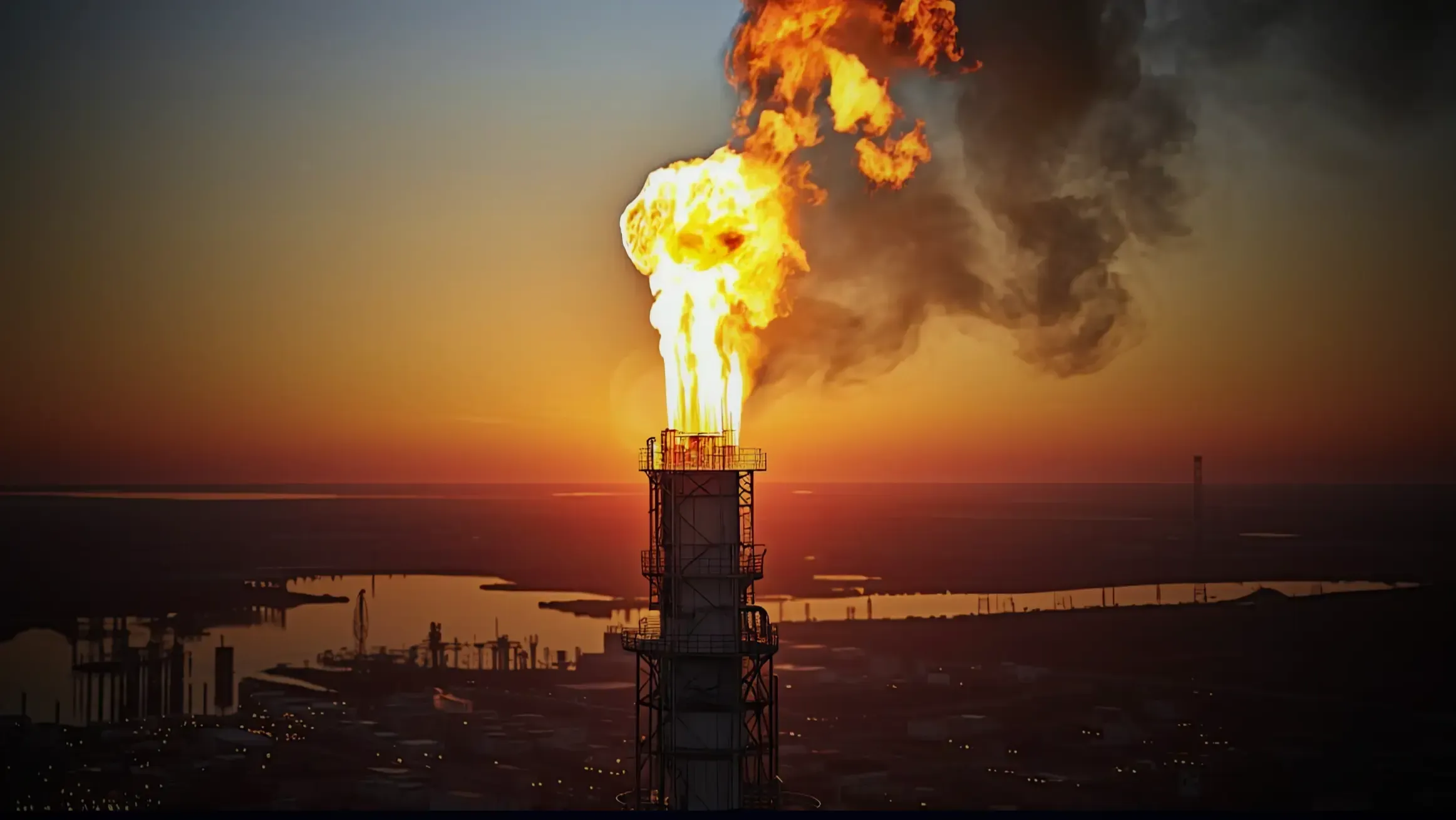
Geopolitical risk is back in control. Oil and natural gas are spiking, equities are retreating, and supply chain fears are rippling across global markets following reports of strikes on key energy facilities.
Key Takeaways
- Oil prices have climbed sharply; Brent is trading at multi-week highs while WTI nears triple digits.
- Natural gas futures have jumped nearly 5% following attacks on major refining complexes.
- European equities are under significant pressure, with major indices like the DAX and CAC 40 down.
- Tech stocks face specific risks tied to LNG and helium supply chain disruptions.
- Market sentiment has shifted firmly toward risk-off positioning.
Energy Shock Drives Prices Higher
Markets reacted instantly to the escalation: Following reports of strikes on Middle East energy infrastructure, crude prices jumped. Brent is currently trading near $113 to $116 per barrel, while WTI is hovering around $97 to $99 per barrel at the time of writing.
The natural gas market is seeing even more extreme volatility. In Europe, natural gas futures soared more than 25% to reach around $78 per megawatt hour, the highest level in over three years. This follows confirmed damage to the Ras Laffan processing hub in Qatar. US Natural Gas futures are also up, trading near $3.20 per MMBtu. With the Strait of Hormuz effectively restricted, prices remain fluid and highly sensitive to further headlines.
The concern is not just immediate damage. It is the risk of sustained disruption to critical export routes and Qatar’s LNG facilities. Any prolonged instability in these corridors tightens an already thin global market, leading traders to price in a significant geopolitical premium.
Equities Stall as Risk Sentiment Shifts
European markets are seeing a deepening selloff as the session progresses. The STOXX 600 is down approximately 1.9%, while the DAX 40 has dropped roughly 2.3%, currently trading near 22,960.
Energy costs are the primary pressure point. Higher fuel and gas costs feed directly into inflation expectations, which complicates central bank policy. Defensive sectors are being used as a temporary hideout, while transport-related stocks are lagging. Airlines are reacting sharply to the prospect of surging fuel costs.
Tech Hit by Supply Chain Concerns
The ripple effect is hitting tech through second-order supply chain risks. Disruptions to LNG production are impacting global helium supply, a niche but critical component in semiconductor manufacturing.
This has put immediate pressure on chip-related stocks. The market is connecting dots quickly: energy disruption leads to industrial bottlenecks, which then hit high-growth sectors. Even if the full supply impact has not yet materialized, the uncertainty alone is moving prices.
Cross-Asset Reaction and What Traders Are Watching
Across markets, the tone remains one of caution:
- Gold is attempting to find its footing around $4,830 per ounce after a sharp liquidation in the previous session; it remains a key focal point for safe-haven seekers.
- Crypto is seeing a notable pullback; Bitcoin is trading near $70,000, currently on a downward trajectory as investors move away from riskier assets.
- The US Dollar is firming as a flight-to-safety play amid global uncertainty.
For traders, this is a headline-driven environment. Price action is shifting second-by-second based on military and diplomatic developments. In such a high-volatility climate, execution and risk management are the primary priorities.
Platforms like Ouinex, which offer access to both crypto and traditional derivatives in one place, provide the necessary tools for this kind of market. When correlations shift and volatility rises across asset classes, having the flexibility to manage diverse positions becomes a distinct edge.
Sum Up
Oil and gas have spiked, equities are in retreat, and tech is feeling the weight of supply chain uncertainty. Geopolitics is in the driver’s seat, and markets are recalibrating in real time.
Disclaimer
This article does not constitute investment advice, financial advice, or a recommendation to buy, sell, or trade any asset.
Key Risks You Should Understand:
- Virtual assets (cryptocurrencies) can lose their value entirely and are subject to extreme volatility. You may lose your entire investment.
- Government policy changes, including shutdowns, can cause severe and sudden market movements. Past market behavior does not predict future results.
- Trading with leverage (derivatives, perpetuals) can result in losses exceeding your initial deposit. At high leverage, a small price movement can liquidate your entire position.
- Crypto is not insured by government protections. If an exchange fails or is hacked, you may lose all funds.
- Market liquidity can disappear during crises. You may not be able to exit positions at expected prices.
Ouinex's services vary by location and are subject to change. You are responsible for complying with laws in your jurisdiction. Always conduct your own research and consult qualified professionals before making financial decisions. All investments carry risk.