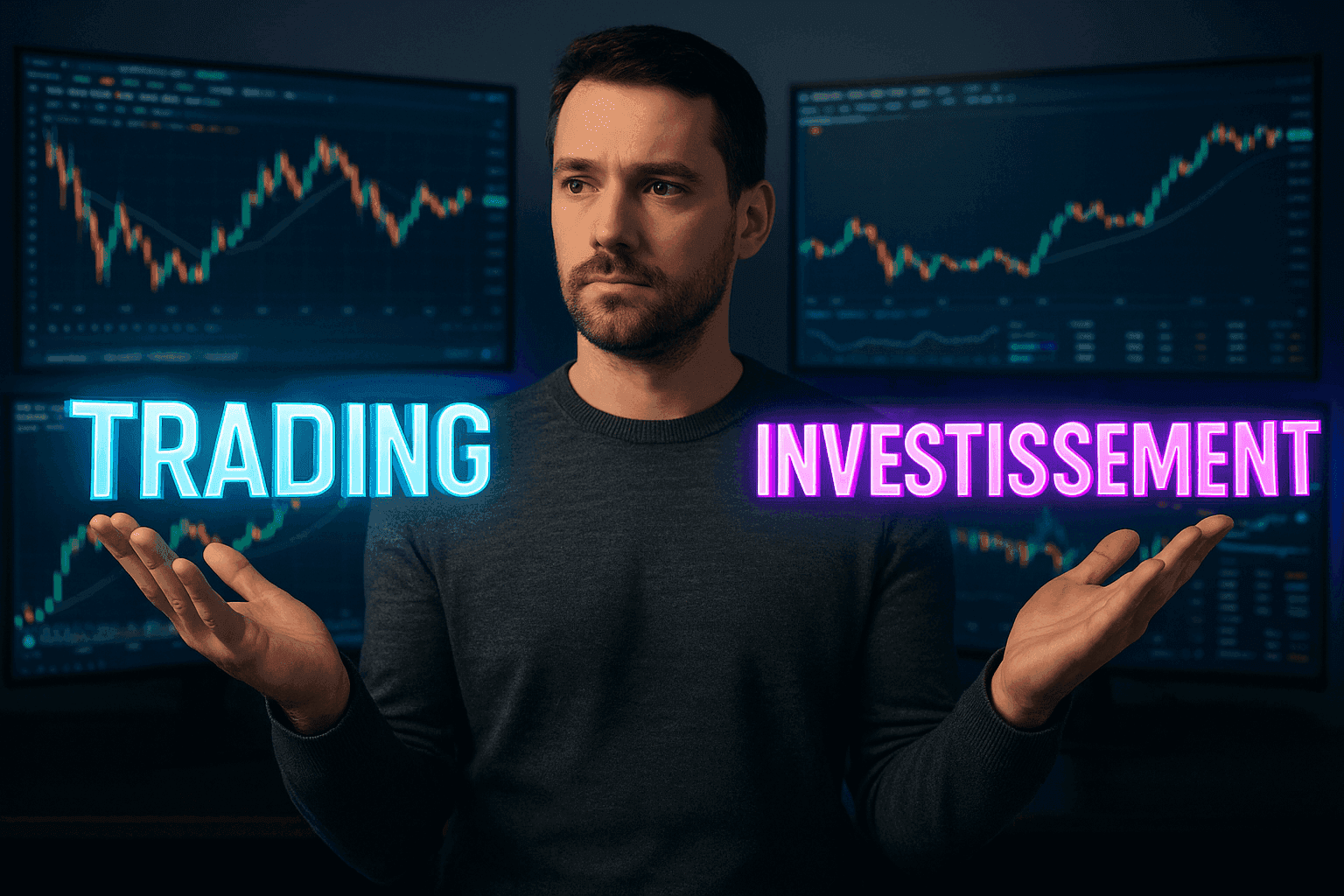
We're often sold the idea of a duel between passive investing (DCA, ETFs, trackers) and active trading (day trading, swing, position trading), as if one excludes the other. In reality, the real question is: how is your risk managed, in both cases? A passive investor who ignores volatility, asset allocation, or macroeconomic events can end up just as exposed as an impulsive trader without a plan or discipline.
Discipline & Psychology: The Indispensable Foundations
At the heart of trading and investing lies discipline. It's what stops emotion from dictating your decisions and ensures you stick to your plan, without giving in to fear or greed. Without discipline, even the best strategies fail. Traders who stick to strict rules (maximum loss per trade percentage, defined stops, etc.) enjoy steadier performance and protect their capital.
The psychology of trading adds a crucial layer: it helps identify cognitive (overconfidence, anchoring bias) and emotional (FOMO, loss aversion) biases. Recognizing and overcoming these biases, with regular journaling and community support, is essential to stay rational, especially during stressful periods or volatile market moves.
Strategy & Risk Management: The Key to Performance
A coherent strategy starts with knowing your profile: are you more of a short-term trader or a long-term investor? From there, you need a clear plan, with entry and exit points, stops, objectives, position management, and diversified allocation. Concepts like position sizing, diversification (stocks, bonds, commodities, sectors, regions), and rebalancing are crucial to avoid concentration risk, limit losses, and preserve your capital over time.
A well-designed strategy is nothing without rigorous risk management: limiting risk per trade (often 1–2%), automatic stops, ongoing monitoring, and position-sizing adjusted to volatility. These techniques protect you from a "big loss" and prevent ruin, even during tough periods.
Education & Practice: The Keys to Empowerment
Progress requires education, simulation, and keeping a trading journal. Testing strategies with a demo account lets you learn without risking real money. Keeping a journal lets you analyze both successes and failures: what decisions worked, what emotions drove your actions? This fosters concrete, structured learning.
IVT (InteractivTrading.com): Your Discipline & Strategy Booster
With IVT, you gain access to a complete approach:
A community of expert traders, sharing live feedback on risk zones, setups, and market psychology.
Structured courses, from technical charting to advanced modules like PRIME, with live coaching.
A clear and repeatable trading plan, helping you spot risks before the market opens, with discipline and method—no improvisation.
A clear goal: to make you autonomous, not dependent—on fads or marketing hype.
Why Work on Discipline, Strategy, and Risk?
Working on discipline prevents emotional mistakes and ensures consistency in your approach. A defined strategy guides your decisions toward measurable results, with clear objectives and criteria for market entry and exit. Strict risk management protects your capital, avoids catastrophic losses, and lets you stay in the game for the long term.
Without these three pillars, investing becomes a risky gamble, and trading an emotional roulette wheel.
In Summary
It's not about choosing between investing or trading, but about building a true methodology:
Understand your profile and your risk tolerance
Be disciplined in execution
Have a clear and documented strategy
Manage risk rigorously
Self-educate, practice, and continuously improve
With IVT, you incorporate these practices in a professional, supportive environment: you no longer follow a guru, you learn to think, analyze, apply, and decide for yourself, with strong tools and a community to support you.
In the end, whether you aim for passive management, active trading, or a hybrid approach, it’s this organized methodology that will make the difference between luck and lasting success.
Join VIP now to start optimizing your market entries!