Cryptocurrencies by Country: Origins, Innovation, and Global Diversity
Updated June 2025
Geography of Cryptocurrencies
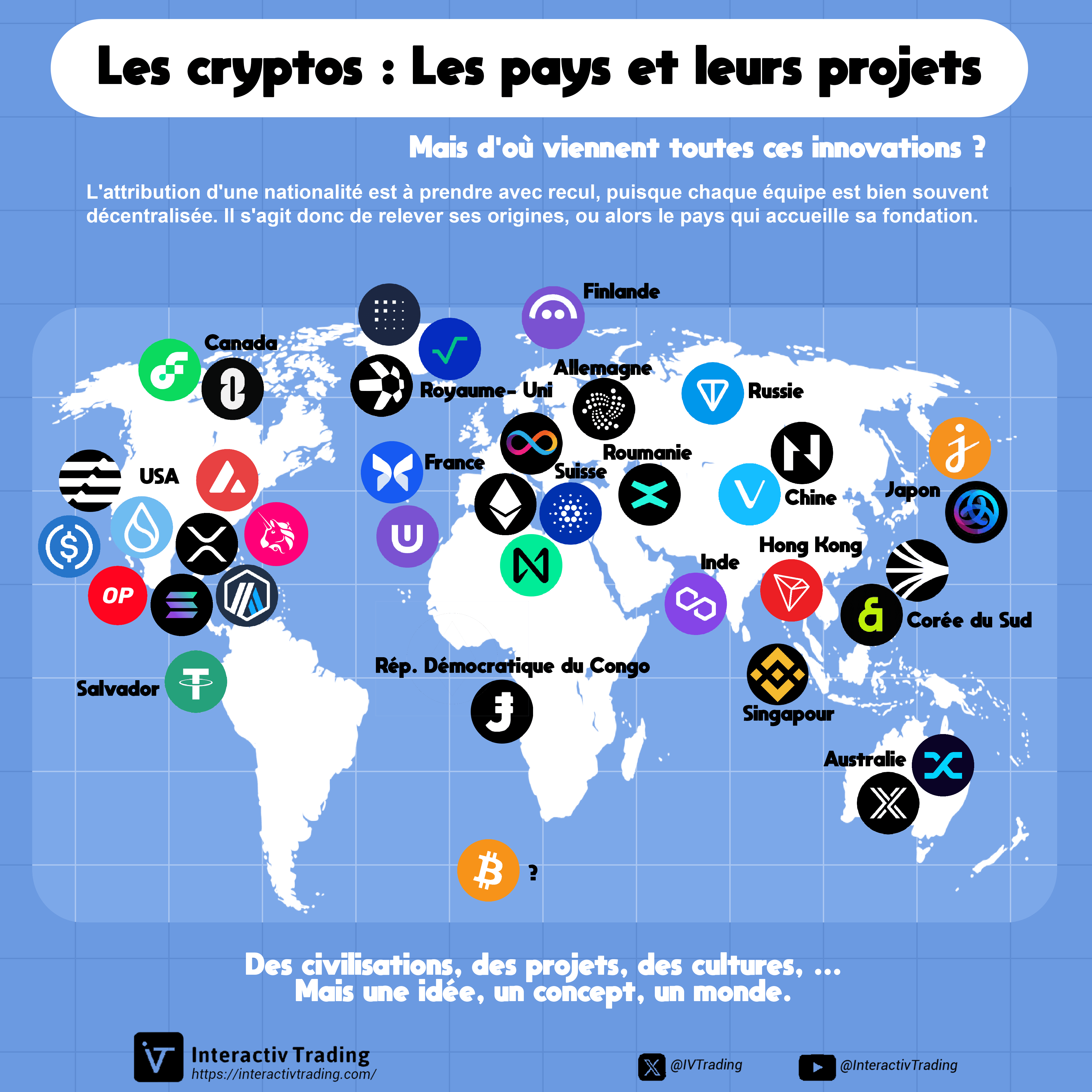
The world of cryptocurrencies extends far beyond the famed Bitcoin. Every country, every region on the globe contributes to this financial revolution with unique projects reflecting their cultures, economic needs, and technological visions. This global crypto map reveals the richness and diversity of the international blockchain ecosystem.
United States: Cradle of Crypto Innovation
American Blockchain Giants
The United States dominates the global crypto landscape with groundbreaking projects:
Major U.S. Projects
- USD Coin (USDC): benchmark stablecoin pegged to the dollar
- Avalanche (AVAX): ultra-fast blockchain for decentralized applications
- Solana (SOL): high-performance platform for DeFi
- Uniswap (UNI): pioneering decentralized exchange protocol
- Chainlink (LINK): decentralized oracle network
- Optimism (OP): Ethereum scaling solution
Innovation and Regulation
The United States blends technological innovation with the development of a progressive regulatory framework, attracting top talents and global projects.
Canada: Northern Technical Excellence
Iconic Canadian Projects
- Ethereum (ETH): co-founded by Vitalik Buterin, smart contract platform
- Chainlink (LINK): vital infrastructure for external data
- Tether (USDT): world's first stablecoin
Canada stands out for its progressive regulatory approach and supportive ecosystem for blockchain startups.
Europe: Diversity and Distributed Innovation
France: European Crypto Ambition
- Polygon (MATIC): Ethereum scaling solution
- Ledger: global leader in hardware wallets
United Kingdom: Traditional Financial Hub Meets Blockchain
- Fetch.ai (FET): decentralized artificial intelligence
- Ocean Protocol (OCEAN): decentralized data sharing
Germany: Engineering and Precision
- IOTA (MIOTA): Tangle technology for the Internet of Things
- Cardano (ADA): academic blockchain with deep research
Switzerland: The Crypto Valley
- Ethereum (ETH): home of the Ethereum Foundation
- Tezos (XTZ): self-amending blockchain
- Polkadot (DOT): blockchain interoperability
Switzerland has established itself as the world’s “Crypto Valley” thanks to its favorable regulatory environment.
Asia-Pacific: Emerging Blockchain Powerhouse
China: Innovation Despite Restrictions
- VeChain (VET): traceability and supply chain
- NEO (NEO): "Chinese Ethereum" for smart contracts
Japan: Early Adoption and Innovation
- Jasmy (JASMY): IoT and data security
- Astar (ASTR): multi-chain infrastructure
South Korea: Gaming and Metaverse
- Klaytn (KLAY): gaming and entertainment-oriented blockchain
- ICON (ICX): community interconnection
Singapore: Asian Financial Hub
- Binance (BNB): world’s largest exchange platform
Australia: Technical Innovation
- Synthetix (SNX): decentralized synthetic assets
South Asia and Middle East: Emerging Markets
India: Massive Adoption and Innovation
- Polygon (MATIC): infrastructure for mass adoption
- WazirX (WRX): local exchange platform
Latin America and Africa: Financial Inclusion
El Salvador: National Adoption Pioneer
El Salvador became the first country to adopt Bitcoin as legal tender, paving the way for new forms of financial inclusion.
Democratic Republic of the Congo: Natural Resources and Blockchain
Emergence of projects linked to mineral traceability and mobile payments.
Northern Europe: Sustainable Innovation
Finland: Technical Expertise
- Streamr (DATA): decentralized data streaming
- Projects focused on energy sustainability
Nordic Countries: Environmental Focus
Nordic countries are developing eco-friendly blockchain solutions using their renewable energy surpluses.
Geographic Trends in Cryptocurrencies
Regional Specializations
North America
- DeFi (decentralized finance)
- NFTs and metaverse
- Stablecoins
Europe
- Regulation and compliance
- Privacy coins
- Green blockchain
Asia
- Gaming and entertainment
- Mobile payments
- Technical infrastructure
Geographical Influences
- Regulatory framework: major impact on development
- Technological culture: adoption and innovation
- Economic needs: solutions tailored to local markets
- Financial ecosystem: integration with existing systems
Economic and Social Impact by Region
Institutional Adoption
- United States: Bitcoin ETF, corporate adoption
- Europe: MiCA regulation
- Asia: central banks and CBDCs
Financial Inclusion
- Latin America: alternative to unstable currencies
- Africa: access to financial services
- Southeast Asia: cross-border payments
Challenges and Opportunities by Geographic Area
Regulatory Challenges
- International harmonization of rules
- Compliance and anti-money laundering
- Taxation of digital assets
Development Opportunities
- Ongoing technological innovation
- Public-private partnerships
- Education and mass adoption
Emerging Projects to Watch
Next Generations by Region
North America
- Layer 2 solutions for Ethereum
- Cross-chain protocols
- DeFi 2.0
Europe
- Central Bank Digital Currencies (CBDC)
- Tokenization of traditional assets
- Sustainable blockchain
Asia-Pacific
- Web3 gaming
- Social tokens
- AI-blockchain integration
Investment and Trading: Geographic Perspective
Investment Strategies by Region
Geographic Diversification
- Balanced portfolio across regions
- Exposure to emerging markets
- Hedge against regulatory risks
Regional Fundamental Analysis
- Local adoption and use cases
- Institutional partnerships
- Technological roadmap
Specific Risks by Zone
- Regulatory risk: policy changes
- Geopolitical risk: international tensions
- Technological risk: obsolescence
The Future of Crypto Geography
Emerging Trends
Geographic Decentralization
- Distribution of mining and nodes
- Multinational governance
- Universal adoption
Global Interoperability
- Cross-border payments
- Global DeFi
- Universal protocols
Predictions 2025-2030
- Gradual regulatory convergence
- Mass adoption in emerging countries
- Integration with traditional financial systems
Conclusion: A Truly Global Ecosystem
The cryptocurrency map reveals a rich and diverse ecosystem, where each region brings its own unique contribution. From American technical innovation to massive Asian adoption, and European regulation, each country is shaping the future of decentralized finance.
This geographical diversity is a major strength of the crypto ecosystem, ensuring:
- Resilience to local shocks
- Ongoing and diverse innovation
- Adoption tailored to cultural specifics
The future of cryptocurrencies will be built on this global collaboration, where every project and innovation helps create a more inclusive and accessible financial system.
Investing in Geographical Diversity
For investors, this global distribution offers unique opportunities for diversification and exposure to various markets and innovations. The key to success lies in understanding local peculiarities and the competitive advantages of each region.
This article is provided for informational purposes only and does not constitute investment advice. Cryptocurrencies are volatile assets and any investment involves risks of capital loss.