Ouinex Featured in Forbes: The Race Toward the All-in-One Financial App Is On
Updated January 2026
In December 2025, on a stage in San Francisco, Brian Armstrong, CEO of Coinbase, announced what he now called “The Everything Exchange.”
The platform historically associated with Bitcoin was no longer limited to crypto trading. Stocks, prediction markets, derivatives, AI-powered financial advice, and loans backed by crypto assets were now all accessible from a single app.
“Coinbase is no longer just a place to trade crypto,” Armstrong said.
“It’s a place where you can trade everything.”
A few miles away, Robinhood was telling a similar story. Prediction markets—contracts allowing users to bet on elections, sporting events, or macroeconomic data—have become the platform’s fastest-growing product, reaching $100 million in annualized revenue in under a year. Its CEO, Vlad Tenev, already describes them as “one of the largest potential asset classes in modern finance.”
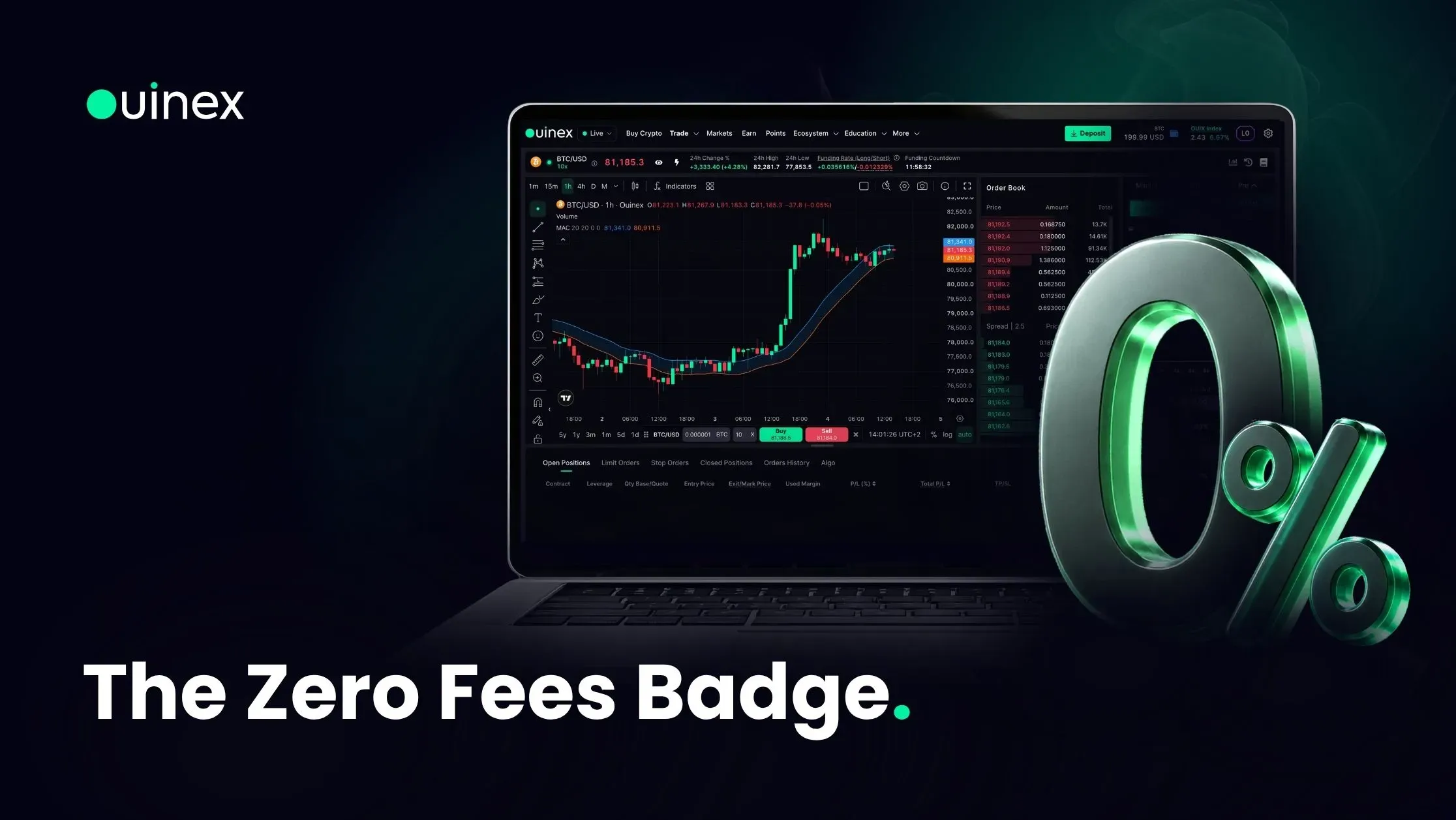
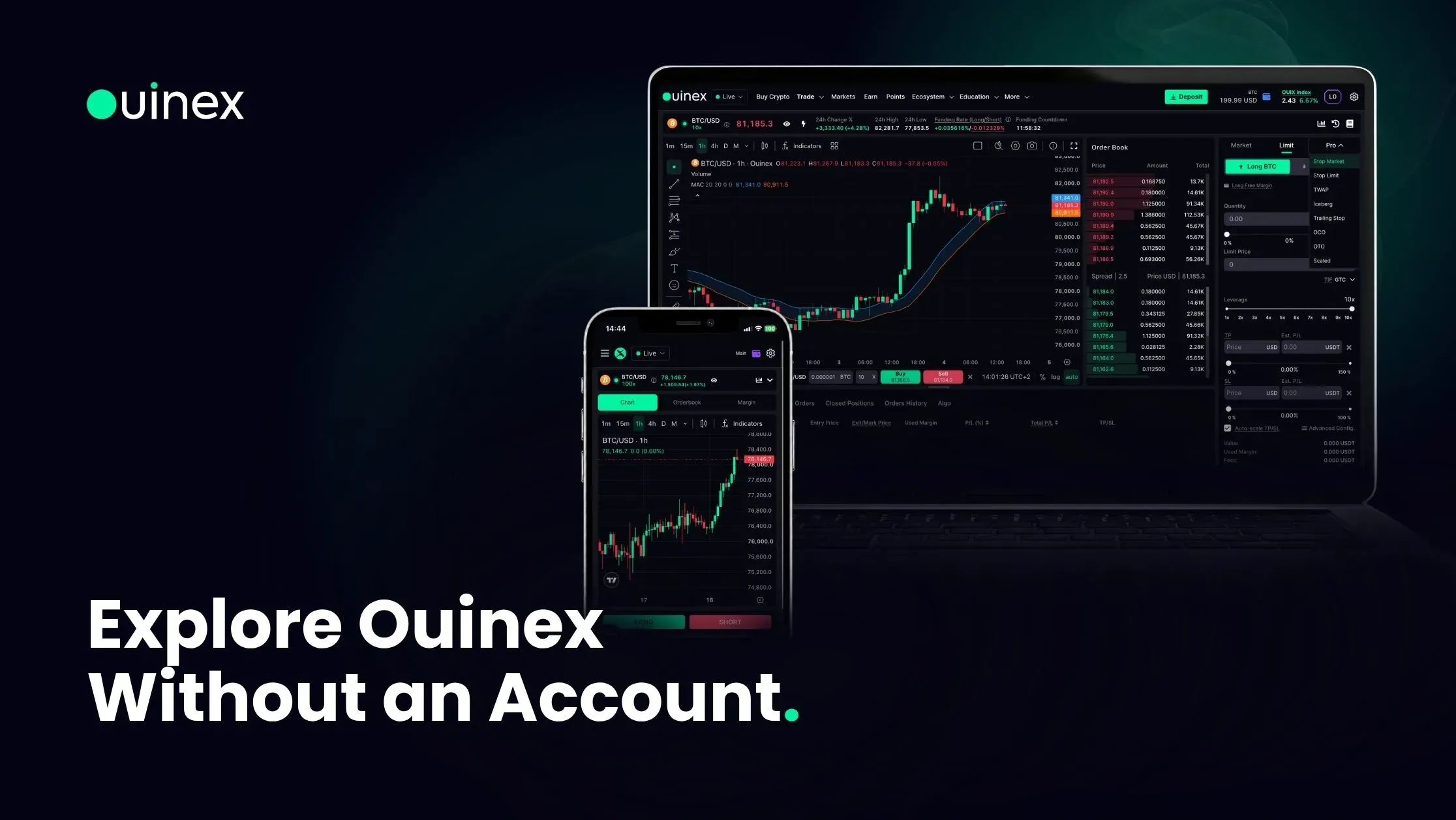
Meanwhile, in Paris, a team of former FXCM executives was building Ouinex, a platform designed to allow crypto traders to access forex, commodities, and stock indices without ever leaving the crypto ecosystem.
“The user experience is completely fragmented,” explains Ilies Larbi, founder of Ouinex.
“Crypto traders don’t have access to gold or stocks, and the world of CFDs remains completely separate.”
One thing is clear. All of fintech seems to be converging toward the same goal: the all-in-one financial app.
The boundaries between financial products that were once distinct are disappearing. What were once specialized platforms—Robinhood for stocks, Coinbase for crypto, PayPal for payments, Revolut for international banking—are turning into super-apps capable of handling trading, savings, stablecoins, derivatives, and even financial betting.
Coinbase’s announcement in December 2025 crystallized this trend. The platform now holds more than $500 billion in crypto assets, a figure that has grown fivefold in three years. But its ambition goes far beyond crypto. Stocks purchased using USDC, prediction markets in partnership with Kalshi, loans backed by Bitcoin and Ethereum, and soon AI-driven financial advisors.
Robinhood, for its part, is moving just as fast. With $1.3 billion in revenue in the third quarter of 2025, the platform has doubled its year-over-year revenue. It now offers access to private companies through Robinhood Ventures and aims to generate more than 50% of its revenue outside the United States within a decade. Assets under custody now exceed $333 billion.
The same pattern is repeating everywhere. PayPal has launched its own stablecoin. Cash App combines payments, Bitcoin, and stocks. Public brings together crypto and traditional markets.
Different starting points, the same destination.
What makes this convergence possible? What Devin Finzer, CEO of OpenSea, calls the tokenization of everything.
Tokenization—the act of representing ownership of an asset as a token on a blockchain—removes historical constraints. Market hours, geographic borders, settlement frictions. Tokenized assets can trade 24/7, settle in minutes, and move without friction.
Coinbase is already discussing the tokenization of real estate and private company shares. Robinhood offers more than 400 tokenized stocks in Europe. Crypto infrastructure is gradually becoming universal financial infrastructure.
But the convergence works in both directions. Crypto platforms are adding traditional assets, while traditional finance is integrating crypto without necessarily adopting blockchain as its core infrastructure. At Ouinex, execution relies on professional forex infrastructure, designed first and foremost to serve traders.
Behind this race toward the all-in-one model, the economic logic is simple. Customer acquisition costs are exploding. A single-product platform must spend more and more to attract users, who will leave as soon as a more comprehensive alternative appears.
Super-apps solve this problem. A user who trades, saves, invests, and uses derivatives within the same ecosystem is far more loyal. Each new product increases the value of the whole.
If everyone offers the same products, how do you differentiate? The answer is no longer purely technological.
Coinbase positions itself as the regulated, institutional platform. Robinhood emphasizes simplicity and democratization. Revolut leans into its European identity. Ouinex claims an approach centered on execution, transparency, and alignment with traders.
As features converge, differentiation shifts to culture, brand, and product philosophy. Financial apps increasingly resemble clubs. Users stay as much for identity as for functionality.
For users, the implications are clear. Prediction markets are coming to traditional platforms, the line between investing and speculation continues to blur, and access to markets is becoming increasingly seamless.
For platforms, the race is on. As Ilies Larbi puts it:
“We have to do everything, fast. Time is against us.”
The universal financial app is no longer a vision.
It is already the battlefield.