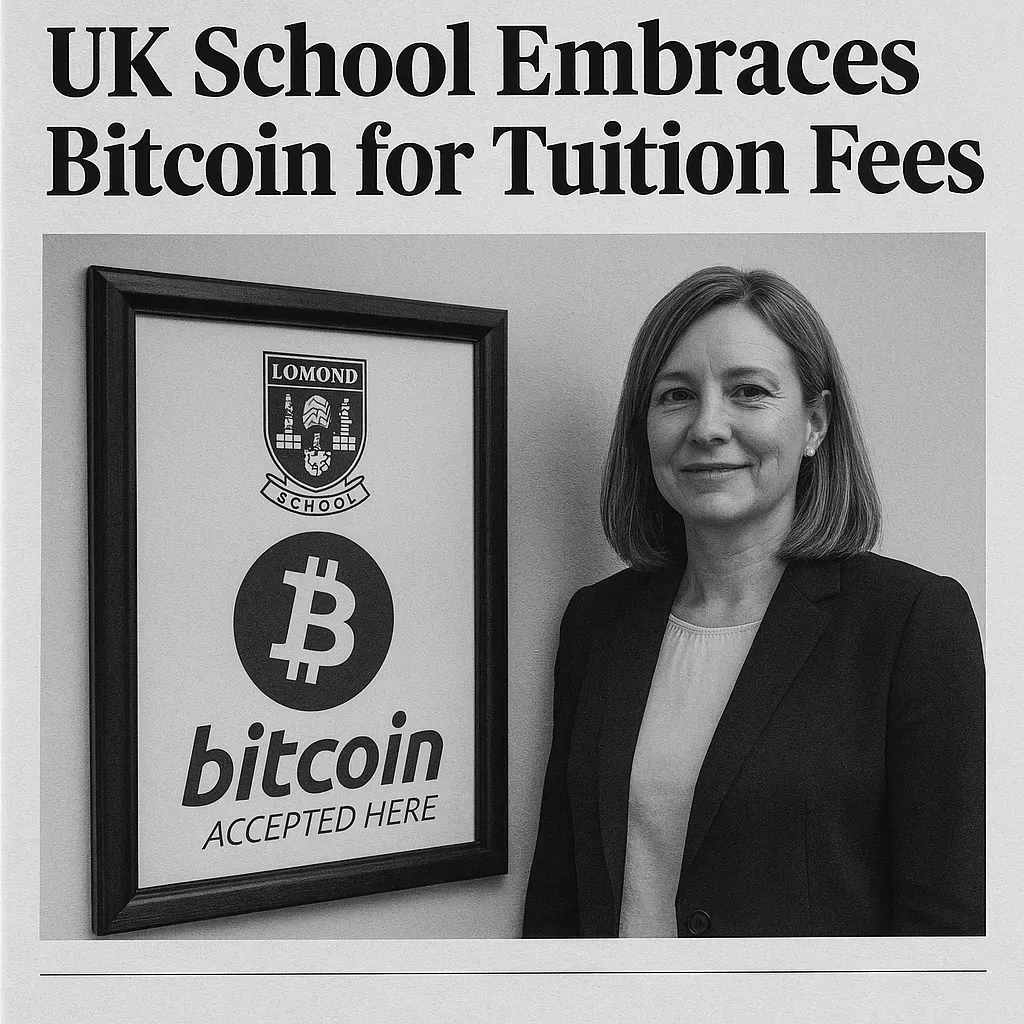
In a landmark move that signals the growing mainstream acceptance of cryptocurrency in the UK, Lomond School in Scotland has become the first British educational institution to accept Bitcoin for tuition payments. The independent school, based in Helensburgh, is embracing digital assets in a bid to meet the changing needs of modern families and make a statement about the future of finance.
Parents can now settle school fees using Bitcoin via a seamless and secure payment system developed in partnership with CoinCorner and Musqet, two financial service providers registered with the Financial Conduct Authority (FCA). For now, the school will automatically convert all received Bitcoin into pounds sterling to shield itself from volatility, but administrators say they are open to holding digital assets in the future.
“We’ve had growing interest from both domestic and international parents asking for alternative ways to pay,” said school bursar James Gallacher. “We view the service not only as a convenience for families abroad but as part of our long-term commitment to innovation.”
The move reflects a larger shift in how institutions once firmly embedded in traditional banking systems are approaching the world of digital finance. As cryptocurrencies become more regulated and user-friendly, more organisations are exploring how they might cut fees, reduce delays, and provide flexibility for cross-border payments.
Lomond School's decision also comes at a time when overseas students are increasingly attracted to UK boarding schools but face challenges with international transfers, fluctuating currencies, and red tape. Bitcoin, proponents argue, can simplify this process, providing faster settlements and more transparency.
“From an international perspective, families in countries with less stable banking systems find reassurance in digital currencies,” said Rebecca Newton, head of admissions. “This gives them one more reason to consider Scotland for their child’s education.”
Despite being the first in the UK to embrace cryptocurrency, Lomond is not alone in the global arena. Educational institutions in the United States, Switzerland, and even El Salvador have experimented with Bitcoin based tuition models, often as part of broader fintech education initiatives.
However, not everyone is convinced. Financial experts have warned that while accepting crypto may seem forward-thinking, it also carries regulatory and reputational risks, particularly given crypto’s association with volatile markets and illicit finance in some jurisdictions.
“Schools need to ensure that crypto payments are compliant with anti-money laundering laws and that proper accounting controls are in place,” said Imran Sadiq, a financial analyst at London-based consultancy FinnEdge. “This is about more than tech; it's about trust.”
Still, Lomond insists the pilot program is fully compliant, and it plans to educate parents and staff on how the system works. The school has also hinted that it may explore accepting other digital assets in the future, depending on demand and regulation.
The bold step by Lomond School may not yet mark a wholesale shift across UK education, but it undoubtedly sets a precedent. As crypto continues to mature and find real-world uses, paying for your child’s future with digital gold may no longer be a futuristic fantasy but the new normal.