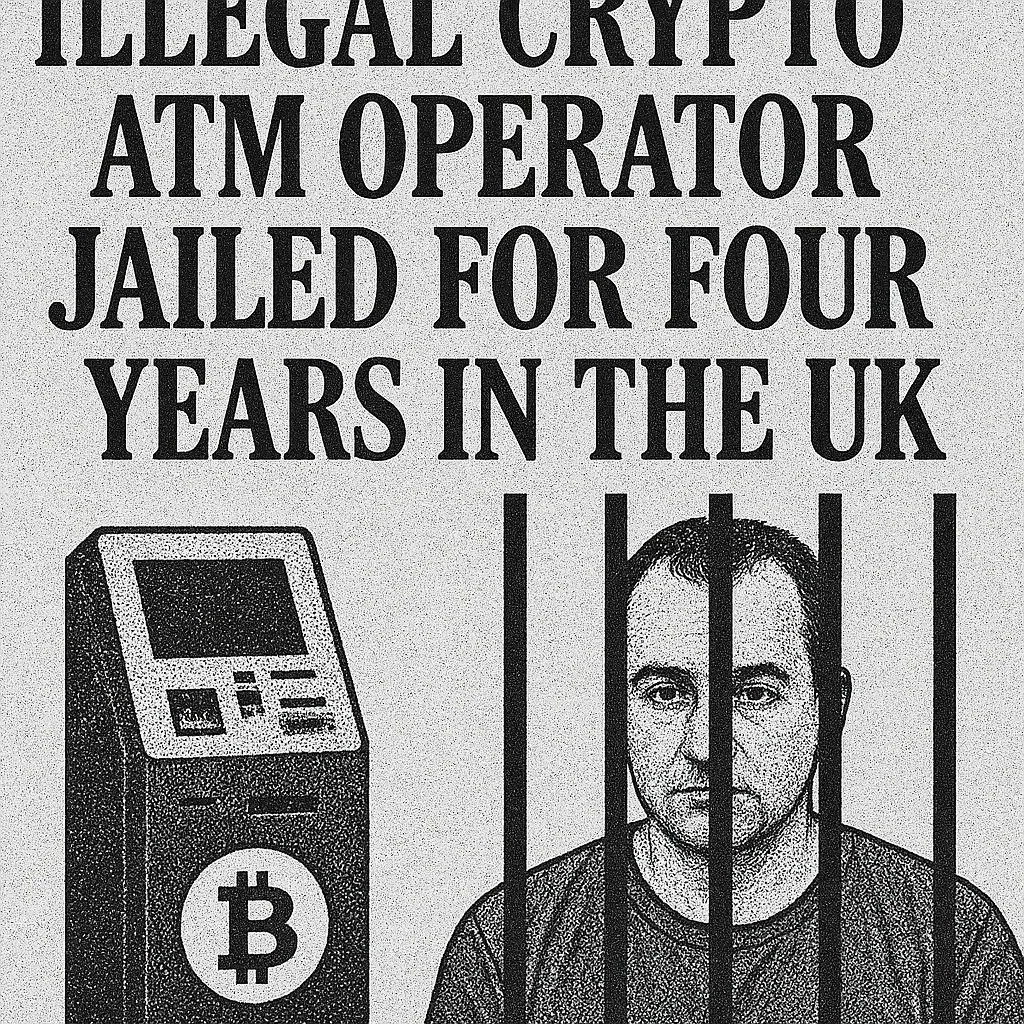
Illegal Crypto ATM Operator
Jailed for Four Years in the UK
In a landmark case for cryptocurrency regulation, Olumide Osunkoya, 44, has been sentenced to four years in prison for illegally operating unregistered crypto ATMs across the United Kingdom. The sentencing, handed down by a UK court, marks one of the most significant crackdowns on illicit cryptocurrency activities in the country.
Osunkoya’s operation, which reportedly processed over £2.5 million ($3.2 million) worth of transactions, violated UK financial laws requiring crypto-related businesses to register with the Financial Conduct Authority (FCA). According to prosecutors, his network of ATMs facilitated transactions that lacked proper anti-money laundering (AML) safeguards, making them a potential tool for criminal activities, including fraud and money laundering.
Investigation and Arrest
Authorities began investigating Osunkoya’s operation after receiving reports of unregistered cryptocurrency ATMs in major UK cities, including London, Birmingham, and Manchester. The FCA, in collaboration with local police forces and the National Crime Agency (NCA), launched a coordinated effort to identify and dismantle these machines. The investigation uncovered that Osunkoya had set up and operated several ATMs without obtaining the necessary regulatory approvals.
Undercover officers were able to use the machines, converting cash into cryptocurrency without undergoing standard Know Your Customer (KYC) procedures. This raised significant concerns about the potential misuse of these ATMs for illicit transactions, particularly given the increasing scrutiny of cryptocurrency’s role in financial crimes.
Court Proceedings and Sentencing
During the trial, prosecutors presented compelling evidence that Osunkoya knowingly bypassed FCA regulations, failing to implement essential safeguards to prevent money laundering and fraud. They argued that his illegal crypto ATM network posed a direct threat to financial security by allowing untraceable cash-to-crypto conversions.
Osunkoya’s defense attempted to argue that he was unaware of the stringent regulations and was merely providing a service to individuals looking to invest in cryptocurrency. However, the court dismissed these claims, emphasizing that the UK’s regulatory framework for crypto-related businesses had been in place for several years and that operators were required to comply with FCA standards.
In his sentencing remarks, Judge Peter Andrews stated: “The deliberate circumvention of financial regulations for personal gain cannot be tolerated, especially in a sector that is still working to establish credibility and trust. This sentence serves as a clear warning to others who may seek to operate outside the law.”
Regulatory Implications and Industry Reaction
The case has had a profound impact on the UK's crypto industry, underscoring the significance of regulatory compliance for businesses that deal with digital assets. The FCA has been cracking down on unlicensed crypto operators, recently issuing warnings to several firms and seizing unregistered ATMs.
Experts believe this ruling could set a precedent for future cases involving illicit cryptocurrency operations. Tom Robinson, co-founder of blockchain analytics firm Elliptic, commented: “Regulators worldwide are increasingly focusing on crypto ATMs due to their potential use in money laundering. This case highlights the need for stricter oversight and compliance.”
As the UK tightens its grip on the cryptocurrency sector, the sentencing of Olumide Osunkoya serves as a stark reminder that businesses failing to adhere to financial regulations face severe legal consequences.
Stay on top of any cryptocurrency news by following us on X @ouinex