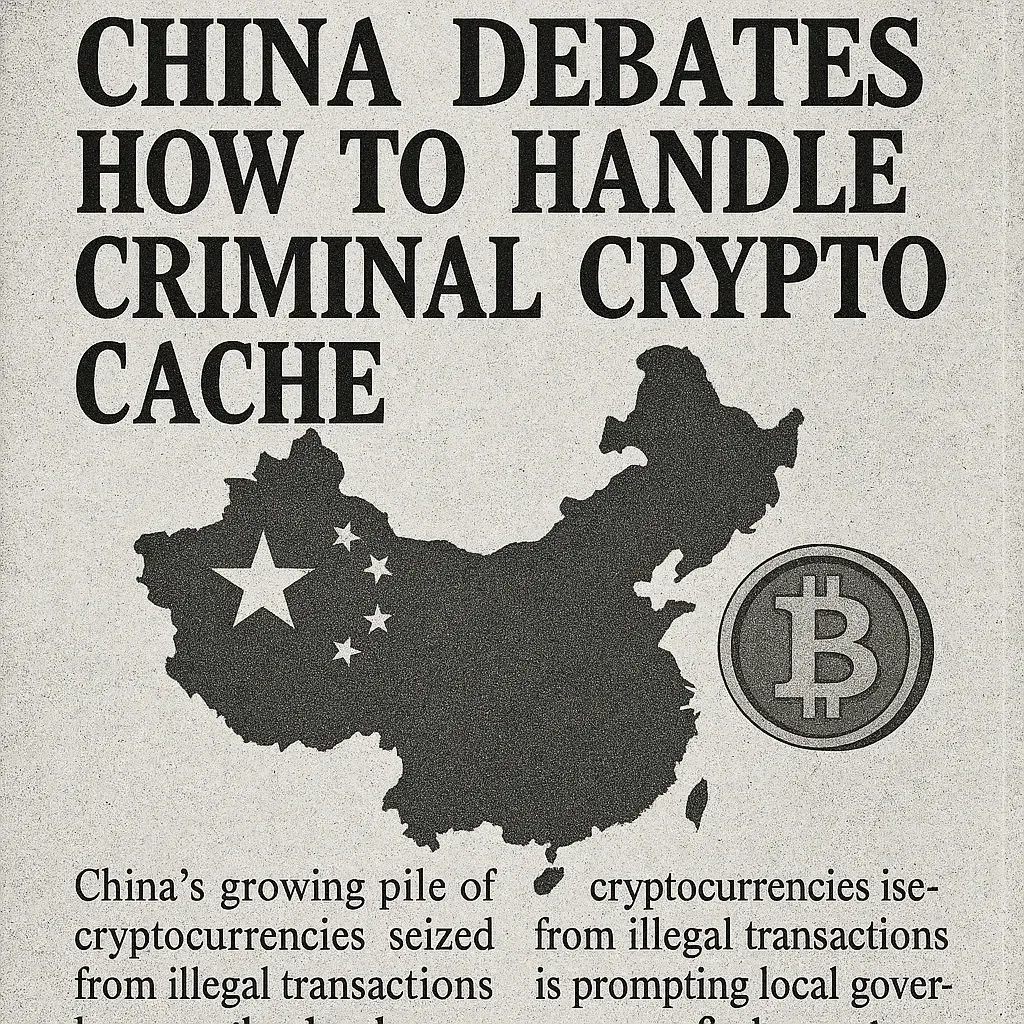
China is grappling with an unexpected digital dilemma: what to do with the surging stockpile of cryptocurrency seized in criminal investigations, now valued in the billions of dollars. The conversation is gaining traction among provincial courts, financial regulators, and policy think tanks, with no clear legal or financial framework yet in place.
Over the past four years, Chinese authorities have cracked down on crypto-related crimes, from illegal fundraising and pyramid schemes to mining operations and money laundering rings. In the process, courts have confiscated thousands of Bitcoin, Ethereum, and other digital assets many of which have appreciated significantly since their seizure.
However, because China officially banned cryptocurrency trading and mining in 2021, these assets sit in legal limbo, creating a regulatory grey area over how (or whether) they can be liquidated, held, or repurposed by the state.
The Dilemma: Burn, Sell or Hold?
Chinese law allows for the confiscation of criminal proceeds, including digital property, but doesn't clearly define procedures for managing volatile crypto assets. Some courts have chosen to convert tokens into fiat and deposit the funds into state accounts. Others have opted to lock the tokens in cold wallets, unsure of the legal implications of selling them in a banned market.
A leaked document circulating on Chinese social media suggests the People’s Court of Chengdu recently requested guidance from the Ministry of Justice on whether seized crypto can be auctioned off via foreign platforms, a move that would technically comply with the letter of the law but raise ethical and diplomatic questions.
“We are at a crossroads,” said Zhang Ming, a legal scholar at Renmin University. “China does not want to legitimise crypto by reselling it, but holding billions in frozen coins doesn’t serve the public interest either.”
A Mountain of Digital Wealth
Estimates suggest China’s courts and public security agencies now hold more than 190,000 BTC, 830,000 ETH, and millions of units of altcoins such as TRX, USDT, and LTC seized during investigations ranging from telecom fraud to underground banking.
That cache is now worth several billion dollars, dwarfing the reserves of some crypto-native companies and surpassing the holdings of many national treasuries.
Yet without a policy on liquidation, the value remains locked in the digital ether, with growing concern about asset security and private key management across multiple jurisdictions.
A Pragmatic Path Ahead?
Some experts are proposing a state-run liquidation vehicle operating offshore, while others suggest transferring funds to research and education grants focused on blockchain development. A few even argue China could set up a sovereign fund for digital assets, helping it maintain a strategic presence in the crypto economy without endorsing retail use.
Currently, the discussion takes place in private. But as the global crypto economy grows, China’s handling of its criminal crypto cache could shape broader policy decisions and offer a glimpse into the country’s evolving stance on digital finance.